







From packed seating bowls to concourses, suites and the spaces fans never see, professional sports venues present some of the most demanding wireless environments in the country. After years of work inside stadiums across the United States, Pierson Wireless has seen firsthand how the connectivity challenge – and the technology behind it – continues to evolve.
On game day, tens of thousands of people can converge on a single location within a matter of hours.
They arrive with mobile tickets on their phones. They text and call from their seats. They share photos and video, check scores and statistics, access venue apps, make mobile purchases, and expect to remain connected as they move throughout the property.
At the same time, the venue itself is increasingly connected.
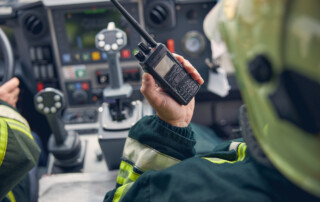
Operations teams, security personnel, vendors, media, employees, and other stakeholders rely on wireless communications and digital systems behind the scenes. The result is a connectivity environment unlike almost any other commercial building.
For the fan, it should all feel effortless. Making it effortless is the difficult part.
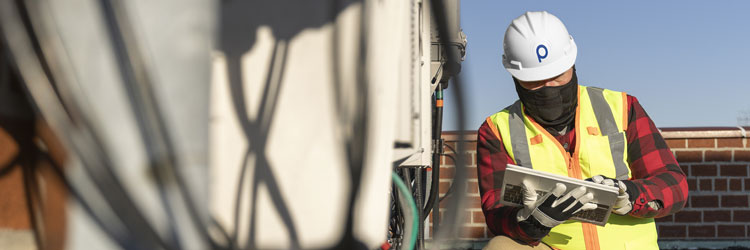
For Pierson Wireless, years of designing, deploying, and supporting wireless infrastructure in professional sports venues across the United States have provided a firsthand look at what happens behind the scenes – and why reliable stadium connectivity requires far more than simply delivering a strong cellular signal.
Why Stadium Connectivity Demands More Than Standard Wireless Networks
The scale of a professional sports venue is obvious. The wireless challenge is less visible.
Unlike a typical office building, where network demand is distributed relatively predictably throughout the day, stadium traffic can arrive almost all at once. Tens of thousands of devices may concentrate within a comparatively small geographic footprint, with usage patterns changing as crowds enter the venue, move through concourses, and settle into their seats.
And increasingly, those users expect the same connectivity inside a packed stadium that they experience virtually anywhere else. Individuals are now more than ever connected throughout a game: utilizing social media, live streaming, FaceTiming, sending videos and pictures; sharing their experience in real time with the world as the event evolves.
Recent deployments illustrate the scale involved. Ahead of the 2026 FIFA World Cup, for example, Verizon said it was preparing for stadium data consumption potentially exceeding 50 terabytes per match while increasing bandwidth at U.S. host stadiums by three to five times.
That density changes the engineering equation.
“You may have 60,000 to 80,000 people in a stadium, but they’re not all using the network the same way. Fans, employees, vendors, and operational teams each have their own connectivity needs. When you combine al of that activity in one location, the level of bandwidth and capacity required to keep everything running is significant.”
-Ross Pierson, CEO and Founder of Pierson Wireless
Stadium DAS: Delivering Both Cellular Coverage and Network Capacity
In many buildings, the first wireless question is straightforward: Do we have coverage?
Inside a stadium, the more difficult question is often: Do we have enough capacity, in the right places, when the building is full?
A signal reaching a seat doesn’t necessarily mean the network can accommodate thousands of people simultaneously using that signal.
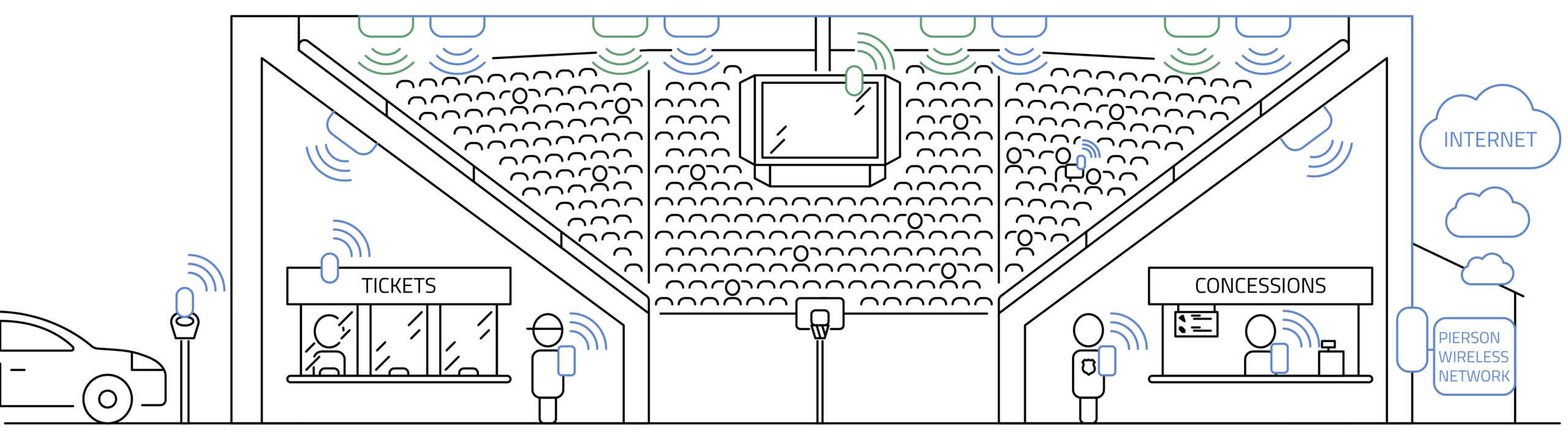
That’s one reason distributed antenna systems (DAS) have become such an important component of stadium wireless infrastructure. By distributing cellular signals throughout a venue, DAS can help provide the coverage and capacity required across highly varied environments – from seating bowls and suites to concourses, entrances, service areas, and other spaces throughout the property.
Modern systems also have to accommodate an evolving mix of spectrum and technologies. Current stadium deployments can incorporate LTE, 5G, C-band, and millimeter-wave spectrum, with network architectures continuing to evolve alongside carrier requirements.
The objective isn’t simply maximum signal strength everywhere. It is a carefully engineered RF environment capable of putting capacity where it is actually needed.
Engineering Stadium Wireless Infrastructure for Retrofits and New Construction
There is no universal blueprint for stadium connectivity.
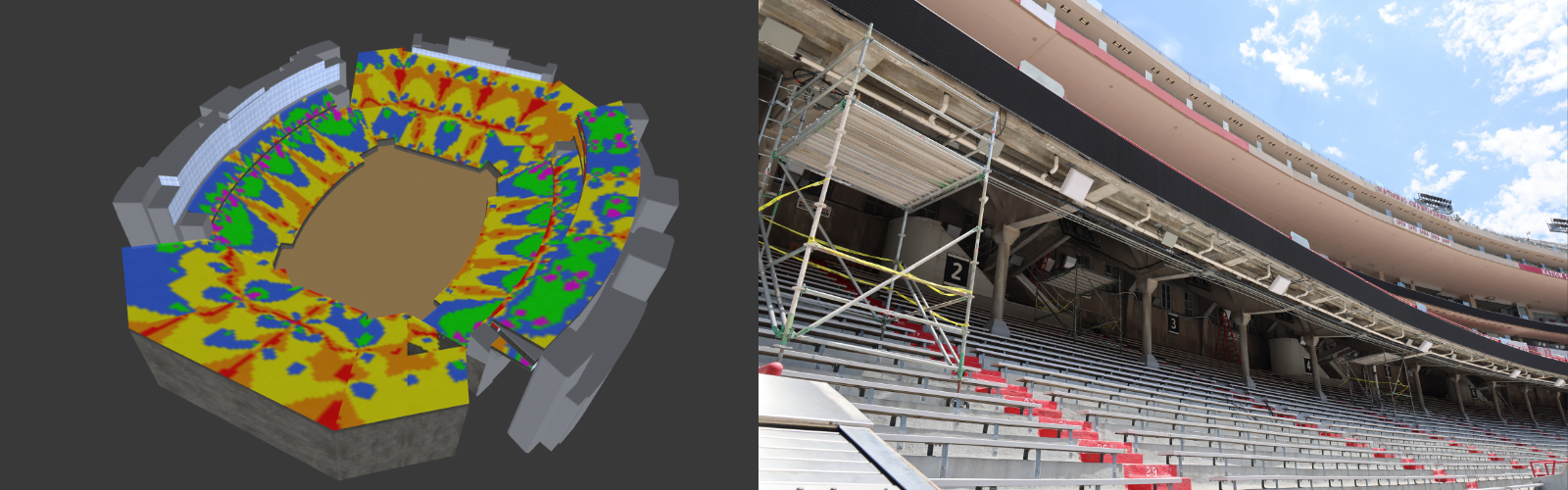
A seating bowl presents a different RF environment from an enclosed suite. A crowded concourse creates different requirements from a parking area. Building materials, structural geometry, antenna placement, available pathways, carrier requirements, and even the configuration of the seating can influence system design.
The challenge becomes even greater in an existing venue.
Unlike new construction, where wireless infrastructure may be incorporated earlier in the planning process, an existing stadium can require engineers to introduce new technology within a structure designed decades earlier (and sometimes one that has already undergone multiple generations of wireless upgrades).
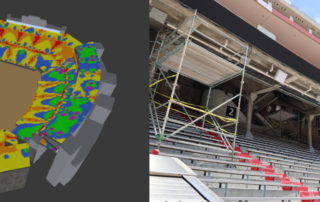
Industry deployments demonstrate just how varied those solutions can become. Stadium systems today may incorporate antennas beneath seats, overhead or directional antenna systems, extensive fiber infrastructure, and multiple RF sectors engineered around specific areas of the venue.
For the systems integrator, mastering the stadium’s physical architecture is just as critical as understanding the technology.
“These venues are designed by some of the leading architecture firms in the world, with tremendous attention given to the fan experience. We take those beautiful structures and find ways to integrate the wireless infrastructure they need without compromising the design. It’s about making the technology work within the architecture, not the other way around.”
-Ross Pierson, CEO and Founder, Pierson Wireless
The Network Fans Never See: Inside Game-Day Stadium DAS
Much of the infrastructure responsible for the connected game-day experience is intentionally invisible.
Fans don’t need to know where an antenna is located or how fiber reaches a particular sector of the stadium. They simply expect their phone to work.
That apparent simplicity can require an extensive infrastructure ecosystem behind the scenes: signal sources, head-end equipment, fiber, remote units, antennas, power, monitoring systems and coordination among carriers, venue operators, technology partners, and construction teams.
In high-density environments, even antenna placement can become remarkably precise. Systems may divide stadiums into numerous sectors, allowing capacity to be directed toward particular sections rather than treating an entire seating bowl as one homogeneous coverage area.
That infrastructure must also coexist with the architecture and operational requirements of the venue.
A professional stadium is, after all, still a public-facing entertainment environment. Wireless equipment cannot simply be placed wherever RF performance is most convenient. Engineering teams have to balance performance with aesthetics, physical access, constructability, safety, and the realities of operating a major venue.
Real-Time Optimization: Managing Stadium Cellular Coverage During Game Day
Engineers can model, design, and test a stadium wireless network for months leading up to opening day. Then the crowd arrives.
No simulation can fully replicate the reality of a packed venue. Real-world network behavior can shift from one event to another. Different areas of a venue may experience sudden surge spikes. Network usage itself continues to evolve as fans adopt new devices and applications.
That makes optimization and monitoring part of the larger stadium connectivity story.
During major live events, engineering teams monitor performance in real time to see the exact traffic patterns and network performance, then make subsequent adjustments. At NRG Stadium, for example, network teams have described analyzing data from each event to determine where additional capacity may be required before the next kickoff.
For experienced wireless teams, the network is therefore not necessarily “finished” when construction ends.
Performance data directly shapes the next engineering decision.
WATCH: Inside Stadium Wireless with Pierson Wireless
Ross Pierson and Brady Britten discuss the unique challenges behind wireless connectivity in professional sports venues and what years of stadium deployments have taught Pierson Wireless about designing networks for game day.
The Multi-Network Future: Stadium DAS, Private 5G, and Venue Wi-Fi
The definition of stadium connectivity is also expanding.
For years, much of the conversation centered on providing cellular coverage and capacity to fans. That remains critical, but wireless infrastructure is increasingly supporting a broader set of applications throughout sports venues.
Private cellular networks are one example.
In professional sports, private 5G is already being used for highly specialized operational applications. In 2026, Major League Baseball introduced an automated ball-strike challenge system supported by private 5G networks across all 29 U.S. MLB stadiums. Other professional sports environments are using or exploring dedicated wireless connectivity for operational communications, media workflows, and other applications.
The distinction is important: DAS, Wi-Fi and private cellular networks are not necessarily interchangeable technologies. Each can serve different users and applications within the same venue.
Increasingly, the stadium is becoming an ecosystem of networks.
Contact Us - Stadium Connectivity
Learn more about Pierson Wireless solutions for stadiums, arenas and large public venues.
Why Proven Integration Experience Matters for High-Density Wireless
There are few environments where wireless infrastructure is subjected to the same combination of density, scale, architectural complexity, and public expectation as a professional sports venue.
The technology will continue to change. Spectrum will change. Devices will change. The applications running across these networks will change.
But one requirement remains remarkably consistent: when the seats are full and the game begins, the network has to perform.
For Pierson Wireless, experience across professional sports venues nationwide has created a body of knowledge that extends beyond any single deployment. Each venue presents a different building, different constraints, and different requirements; but the lessons learned from solving those challenges carry forward.
And for the thousands of fans walking through the gates each game day, the best wireless infrastructure may ultimately be the infrastructure they never have to think about.
Whether providing targeted engineering, system integration, or infrastructure support, Pierson Wireless is proud to have contributed to projects supporting connectivity at a diverse range of stadiums, arenas, and large public venues.
















Leave A Comment